


MedCHEM
Modelling the path from molecule to innovative medicine.
An advanced program to navigate the entire drug lifecycle.
The Executive Master in Drug Development & Clinical Pharmacology is an advanced, multidisciplinary program designed by Humanitas University to train highly qualified professionals capable of navigating the entire drug lifecycle with a strong focus on scientific research, novel biotechnologies and translational development.
The Program provides an integrated view of drug discovery and development, spanning from unmet medical needs and molecular target identification to clinical development, regulatory approval and post-marketing surveillance.
The Master is conceived to bridge the gap between molecular science, preclinical and clinical development, equipping participants with the conceptual frameworks and practical tools required to operate effectively in academic research, pharmaceutical and biotechnology industries, and regulatory-driven environments.
The Executive Master in Drug Development & Clinical Pharmacology aims to equip participants with advanced scientific and methodological competencies to understand, design, and manage the entire drug development process, from early discovery to clinical application and post-marketing evaluation.
From target identification and molecular design through clinical trials, regulatory approval, and post-marketing surveillance.
Systematic integration of in-silico modelling with experimental and clinical pharmacology, reflecting current drug development standards.
Including biologics, RNA-based drugs, advanced delivery systems, and cutting-edge drug discovery technologies.

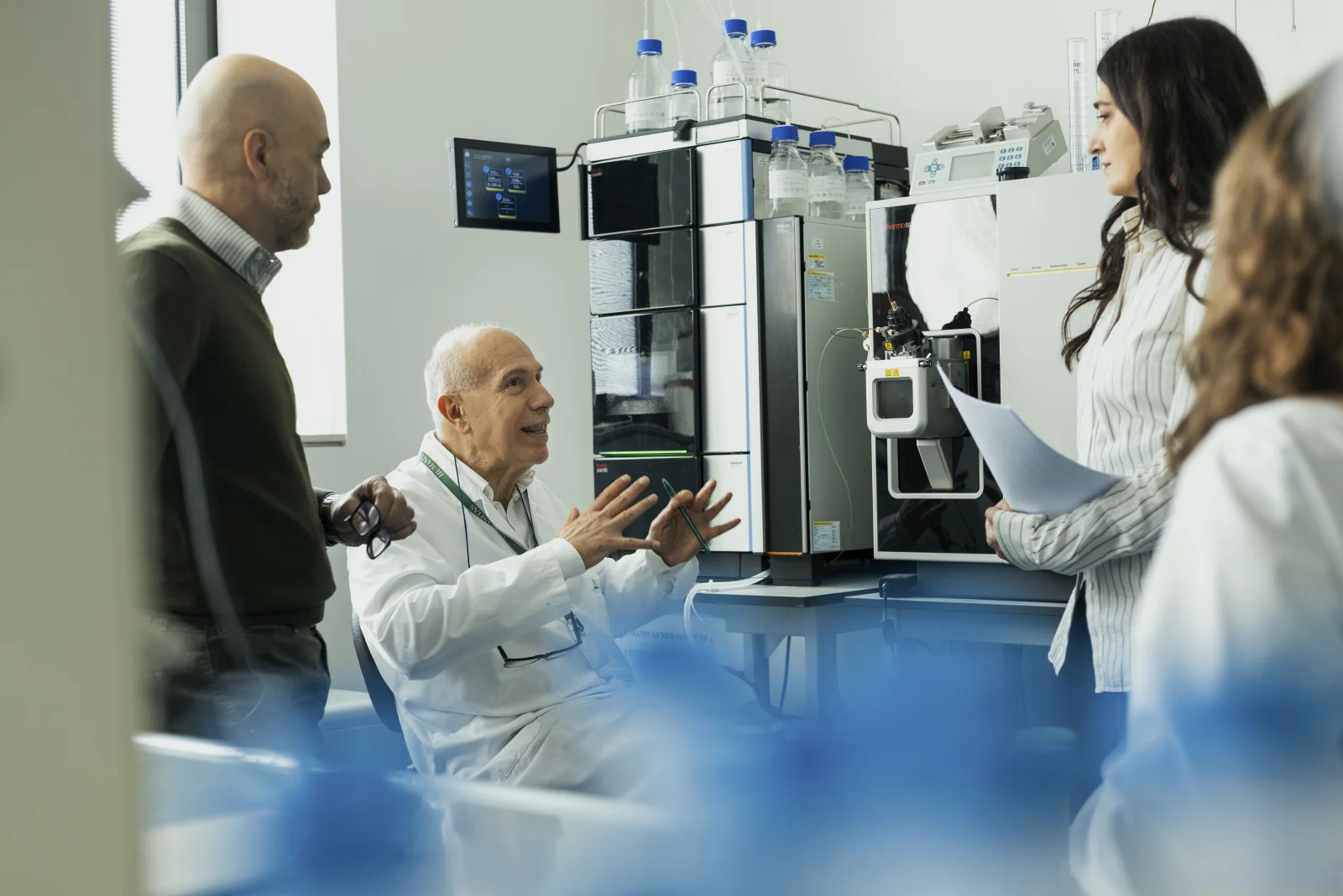






Where education meets clinical excellence
The Master is structured over 12 months (60 ECTS) and delivered in a blended format, combining live online sessions with intensive on-campus weeks dedicated to practical and interactive activities.
The Program develops expertise in model-informed drug development, computational simulations, pharmacokinetics and pharmacodynamics, and innovative therapeutic technologies, including biologics and RNA-based medicines. Graduates will be prepared to contribute to multidisciplinary R&D teams, apply quantitative and translational approaches to optimize drug efficacy and safety, and operate effectively across academic, industrial, and regulatory environments involved in the development of innovative medicines.
The final applied project is developed in collaboration with industry, academia or research institutes. Students work on real-world drug development challenges under academic and/or industrial supervision.
The didactic organization includes:
This format allows working professionals to combine executive education with ongoing professional commitments, exploring networking opportunities and career-advancing experiences.
The Master is delivered by a multidisciplinary Faculty composed of academic experts from Humanitas University and partner institutions, alongside professionals from the pharmaceutical and biotechnology sectors.
The learning ecosystem is enriched by:
Prof. Dario Cattaneo
Director
Associate Professor of Pharmacology
Clinical Pharmacologist at Humanitas Hospital
Prof. Maurizio D'Incalci
Co-Director
Full Professor NT of Pharmacology, Humanitas University
Head of the Anti-Cancer Pharmacology Laboratory, Humanitas Research Hospital
Prof. Michela Matteoli
Co-Director
Full Professor of Pharmacology and Vice-Rector for Research, Humanitas University
PhD MECM Coordinator
The program provides a strong foundation for careers at the interface between science, development and clinical application of medicines.
Graduates in Medicine, Pharmacy, Chemistry, Biotechnology, Biomedical and Life Sciences, and related scientific disciplines.
Bridge the gap between molecular science, preclinical and clinical development with practical tools and conceptual frameworks.
High-impact roles at the interface between science, development and clinical application of medicines.
The Master is designed for graduates in:
It is particularly suited for early-career scientists and clinicians aiming to develop advanced expertise in drug development and clinical pharmacology, as well as for professionals seeking to reposition their careers toward translational research and R&D-oriented roles.
Graduates will acquire competencies enabling them to pursue high-impact roles such as:
The Executive Master admits a limited number of participants to ensure high-quality interaction and mentoring.
*The Master Direction may assign scholarships and further contributions based on specific merit requirements and external funding opportunities.
| Start | November 2026 |
| End | November 2027 |
| Duration | 12 months |
| Language | English |
| Deadline | 11th November 2026 |
| Fee | €15.000 (scholarships available) |
Access to the Master is subject to an evaluation of the candidate's academic and professional titles. The Call for Applications is the official document all candidates must review before applying.
We believe that access to advanced education should be driven by talent, ambition, and professional potential. To support outstanding candidates from diverse professional and international backgrounds, the Executive Master offers a range of scholarships and tuition fee waivers.
Funding opportunities are awarded on a competitive basis and recognize academic excellence, professional achievements, leadership potential and entrepreneurial mindset.
Scholarships and fee waivers are assigned on a rolling basis and are subject to limited availability. Early applications are strongly encouraged to maximize access to funding opportunities.
For candidates demonstrating accelerated career growth, leadership potential, and outstanding professional achievements in healthcare, biotech, pharma, medtech, research, or related sectors.
Ideal for:
Designed to support and empower female professionals pursuing leadership careers in medicine, biotechnology, healthcare management, AI in healthcare, and life sciences innovation.
Awarded based on:
Dedicated to younger high-performing candidates with exceptional academic backgrounds and strong ambition to accelerate their international career trajectory.
Target profiles include:
For professionals actively contributing to healthcare transformation, patient access, public health initiatives, sustainability, or digital innovation in healthcare systems.
Particularly relevant for:
For outstanding international applicants contributing to the diversity and global perspective of the cohort.
Selection criteria include:
Tuition fee reductions shown are indicative maximums, awarded on a competitive basis and subject to eligibility and availability.

Fill out the form and our team will contact you with detailed information about the program.
Fill in the form below to receive the full program brochure. Your details will be used to inform you about the Master and related initiatives.